On Friday, November 13, 2026, a sweeping Federal Aviation Administration (FAA) air traffic control outage triggered a predictable wave of collective hyperventilation across the American travel apparatus.
Cable news anchors deployed their finest catastrophe graphics, terminal concourses degenerated into encampments of exasperated travelers and airline dispatch centers scrambled to mitigate the cascading network shockwaves.
Yet as The Phocuswright Conference attendees gather in Fort Lauderdale to debate the future of distribution, customer experience and digital transformation, yesterday’s paralysis serves as a jarring reality check.
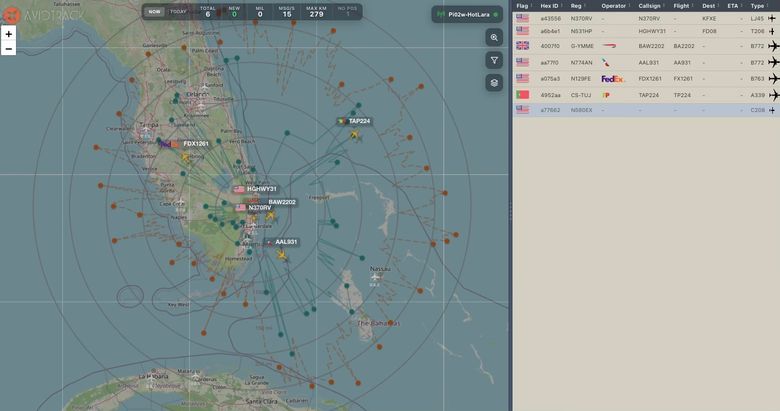
The picture as the FAA released the ground stop
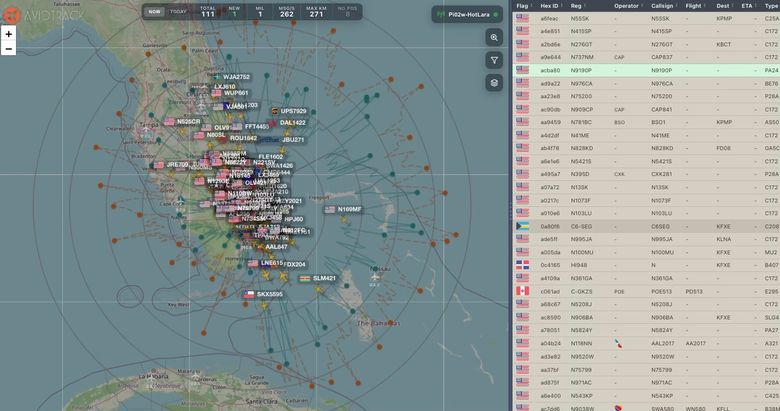
The picture 12 hours after the FAA released the ground stop
The central challenge facing global aviation is no longer just how to build the next generation of guest-facing software. It is how to completely rebuild a core technology stack while keeping an indispensable, high-density machine running at full speed.
Consider the visual reality across South Florida’s airspace over a mere twelve-hour window. One moment, the tarmac and arrival corridors near Fort Lauderdale were operating as a marvel of modern choreography with hundreds of metal tubes moving through tight spatial envelopes with mathematical precision. The next moment, a digital failure rendered that entire complex brittle, turning a fluid system into nationwide gridlock.
The margin between seamless throughput and operational paralysis in the National Airspace System is dangerously thin. What happened yesterday was not an isolated anomaly; it was the inevitable manifestation of systemic risk built over decades. To understand why the system broke —and why it will break again—we must dissect two distinct problems: the decades-long accumulation of technical debt at the federal level and the fragile, opaque architecture of passenger recovery once the stack inevitably fails.
Part 1: Legacy debt and 45 years of kicking the can
In the immediate aftermath of the failure, U.S. Secretary of Transportation Sean Duffy offered blame and weak political arguments around the perils of legacy technology. But moving beyond these trite talking points reveals a structural reality documented exhaustively by independent watchdogs, including the Government Accountability Office’s latest findings (GAO-26-107992). The underlying architecture of American air traffic control has been operating on borrowed time for ages.
To understand how we arrived here, one must trace the lineage back to 1981. When President Ronald Reagan fired more than 11,000 striking air traffic controllers, it triggered a structural pivot in how the federal government managed the National Airspace System.
Over the subsequent 45 years, successive congresses and presidential administrations have repeatedly kicked the modernization can down the road. Short-term stopgap appropriations, political squabbling over FAA reauthorization bills and chronic starvation of multiyear capital investment forced agency engineers to graft modern interfaces onto foundational architectures designed for an era of quarter-scale traffic.
Credit must be given where it is due. Through sheer operational grit, heroic controller dedication and incremental software patches, the FAA managed to expand system throughput more than threefold over four decades—all while operating with roughly 20% fewer controllers than its historic peak. It is a remarkable testament to human ingenuity and the much-stressed humans in those jobs.
Yet operational heroism often masks deep technical insolvency. Both ground-based processing systems and airborne telemetry rely on aging hardware and brittle data pipelines. Accountability for this vulnerability rests squarely inside the department of transportation, its operating organs and a Capitol Hill culture unwilling to fund true, end-to-end architectural replacement.
This failure was hardly unannounced. The current administration received a devastating, tragic wake-up call with the fatal collision between a U.S. Army helicopter and a commercial airliner in January 2025. If both craft had been equipped with ADS-B in the chances of avoidance of that collision would have been vastly improved.
Nearly two years after that tragedy, systemic modernization remains agonizingly incomplete. And no, that simple solution has not been implemented. In aviation infrastructure, deferring core capital expenditure does not eliminate cost—it simply converts balance-sheet debt into operational crisis.
Part 2: Fragile recovery, opaque liability and the missing AI layer
When the control towers go dark, the crisis migrates instantly from air traffic control to the terminal gate. Here, a second structural failure emerges: while the U.S. has engineered an extraordinary logistical network, regulatory accountability has steadily devolved from the federal government to individual commercial carriers, leaving passengers with remarkably little enforceable protection when the machine grinds to a halt.
The root pathology of modern disruption recovery is a profound lack of operational transparency. Anyone who understands network dynamics knows that resolving a massive air traffic disruption cannot be executed via a simplistic first-in, first-out queue. It requires complex dynamic slot allocation, crew tracking and aircraft rotation management. Not just that—there must be priorities established. Both operationally and based on need.
However, the deliberate black box surrounding disruption attribution allows commercial carriers to routinely hide behind blanket labels like "ATC" or "weather-related" delays. This lack of granular data blurs where government infrastructure failure ends and airline commercial miscalculation begins, leaving travelers stranded without any ideas or recourse.
Contrast this void with statutory frameworks established elsewhere. Canada’s Air Passenger Protection Regulations and Europe’s EU261 and UK261 mandates are far from perfect, but they establish clear, legally binding standards for duty of care, mandatory communication and structured financial compensation. In the U.S., that statutory floor is conspicuously absent—a long-standing failure of federal consumer governance. Indeed, the current administration rolled back some of those Biden-era reforms.
Fixing passenger recovery is entirely tractable if industry stakeholders stop operating in defensive silos. Whether the stranded traveler is a family navigating a long-awaited trip to Disney World, a passenger trying to reach a relative in Peoria or an executive flying to CONEXPO-CON/AGG, resolution requires shared operational data, standardized notification protocols and automated re-accommodation pathways across competitive boundaries. Self-help is only possible if there is good data. That is sorely lacking.
This is precisely where artificial intelligence (AI) must move from a board-deck buzzword to practical operational glue. Within air traffic infrastructure, machine learning models can dramatically strengthen predictive flow management, optimizing sector density hours before bottlenecks materialize.
Just as crucially, travelers now carry sophisticated generative AI tools in their pockets. They know what modern software is capable of synthesizing in seconds. Meanwhile, airline service recovery remains crippled by fragmented legacy engines—dozens of disconnected internal systems and manual operations groups making uncoordinated decisions that actively work against one another. Further the liability rests with the person least able to comprehend it. Yes, the traveler.
Properly deployed, AI-driven disruption engines could dynamically orchestrate real-time passenger reaccommodation across air carriers, ground transport networks and hospitality inventory before a passenger even steps up to an overwhelmed rebooking desk.
Rebuilding the stack while the planes are flying is undeniably complex. But hiding behind legacy excuses, outdated tech stacks and opaque delay codes is a deliberate choice. Transparency must be enforced, and operational obligations must be raised on both sides of the tarmac.
Now is the moment to apply the hard lessons of Friday’s failure. Will Washington and industry leaders finally commit to fundamental architectural reform?
Based on 45 years of history, I am not encouraged.